
About the Israeli and American trends in the Gulf
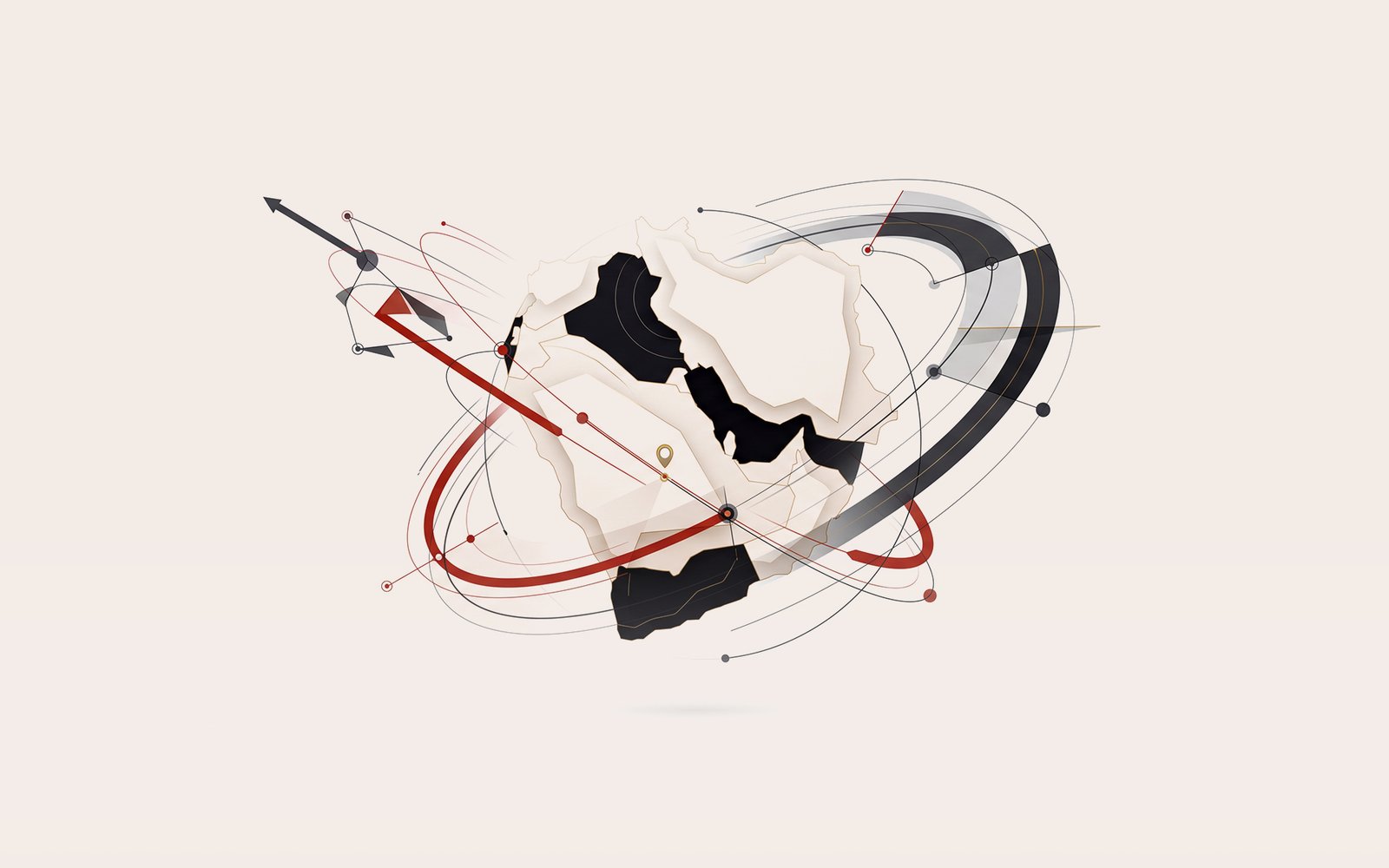
After the easing of COVID-19 restrictions in 2022, I paid a courtesy visit to the head of a research center affiliated with a sovereign government entity in an Arab country. After generously serving us traditional bitter Arabic coffee, some light snacks, and dates, we engaged in conversation. Among the points I raised was that we had observed the existence of two major currents operating actively in the Gulf region and interacting with the policies of its states: the Israeli current and the American current. I argued that these two currents are independent of one another and sometimes even compete.
Our host appeared shocked and unwilling to accept this theory. In fact, he went even further, questioning any suggestion that Israeli actions and objectives might diverge from those of the Americans. He spoke of them as though they were Siamese twins joined at the head.
Because politics is a collection of enigmas, with its events concealed beneath a vast layer of ambiguity, I found myself compelled to explain some of the basic principles governing strategic behavior in the Gulf, in the hope that we might arrive at a conclusion regarding the two currents, the Israeli and the American, in the region.
At the time, we had only recently emerged from the Qatar blockade crisis, and emotions were still strained by the magnitude of what had occurred. We reflected on the fact that some Gulf states' need for "external support to implement fundamental internal changes" had driven them into a state of competition that escalated into a zero-sum conflict at its peak before later receding. In this context, there was a strong incentive to seek external backing from any force perceived as regionally influential, including Israel.
Yet the Israelis themselves have been facing a dilemma since the establishment of their state. Israel was founded with Western support, and its existential connection to the West is organic, relating directly to the continuity of its existence as a state. Consequently, many Israelis feel the need to achieve a degree of independence, though not strategic independence, from that framework and to pursue direct interests with their Arab surroundings as an established state possessing significant international influence, even though it remains largely rejected or not fully accepted as a normal member of the region.
Against this backdrop, the Israelis moved to exploit the aforementioned demand for support and encountered a remarkably receptive response, one that sometimes went beyond pragmatism and approached complete identification and alignment on certain issues. The principle was straightforward: Gulf normalization with Israel in exchange for international diplomatic support and recognition of new political realities within those states. Matters even progressed to the point where some of the more receptive states attempted to use their relationship with Israel to influence the Americans themselves, whether diplomatically or through lobbying networks, in pursuit of American backing or positions that had long been delayed or withheld, particularly as changes in the White House accompanied presidential elections.
Those who aligned themselves with the Israeli current in the Gulf later found themselves in sharp confrontation with what the author describes as the American "deep state." They had assumed it would remain in the background until 2024, but Biden's rise to power altered the calculations. The confrontation with American institutions became more direct, and the distinction between the Israeli and American currents in the Gulf became increasingly pronounced. As a result, significant differences emerged between some Gulf states and the U.S. administration. While these differences did not fundamentally alter the traditional strategic alliances between the United States and those states, they undoubtedly affected the strength and effectiveness of those alliances.
According to this perspective, the Israelis generally exhibit an exclusionary political tendency, which led some Gulf states to adopt highly rigid positions during the Qatar blockade. This may have reflected an alignment with what the author sees as the Israeli approach, in contrast to the American approach, which seeks containment and the achievement of interests with the least possible cost, even if doing so requires long-term strategic patience.
Today, the Americans and Israelis appear to be engaged in a serious and visible disagreement. The Americans are dissatisfied with the right-wing direction of Netanyahu's government, while Netanyahu remains committed to preserving his current coalition through policies that satisfy exclusionary right-wing currents, some of which conflict with American interests and priorities in the Middle East.
This dispute itself is not our primary concern. Allies may disagree today and reconcile tomorrow; their relations may strengthen at times and weaken at others, and that is entirely normal. What concerns us is that, in the Gulf, we have paid a high price for allowing external currents to penetrate more deeply than they should have. The structures of states and political systems naturally require a degree of international support, and such support is understandable, legitimate, and often necessary. However, when the consequences of excessive alignment with external currents begin to undermine certain fundamental principles, the outcome can be detrimental to everyone. We should never forget that geography is destiny.
Comments
Approved comments appear here. New comments are reviewed before publishing.
ooooo
Sign in to join the discussion.
Login